Difference between revisions of "TCS-12"
Jump to navigation
Jump to search
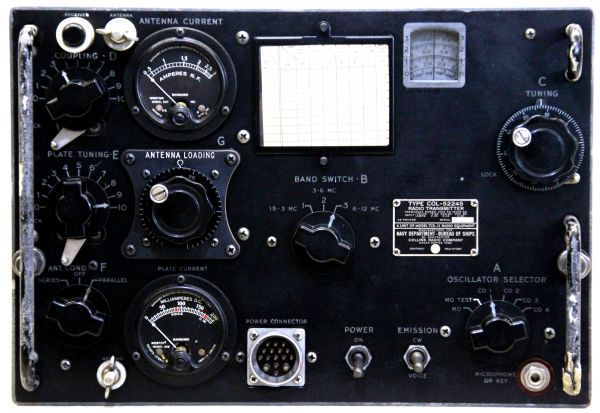
TCS-12 Transmitter, Front view
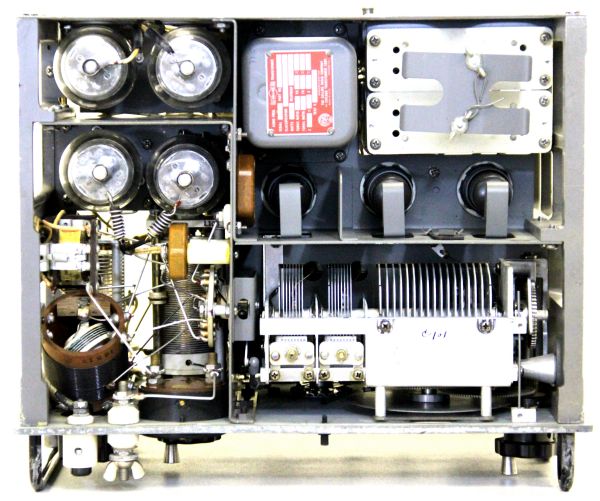
TCS-12 Transmitter, Top view
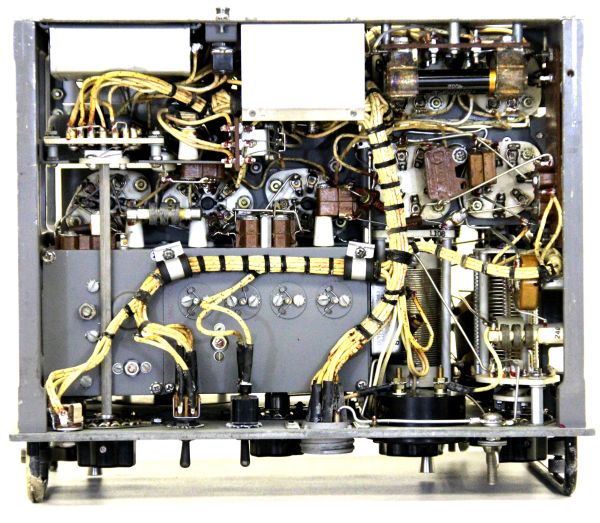
TCS-12 Transmitter, Bottom view
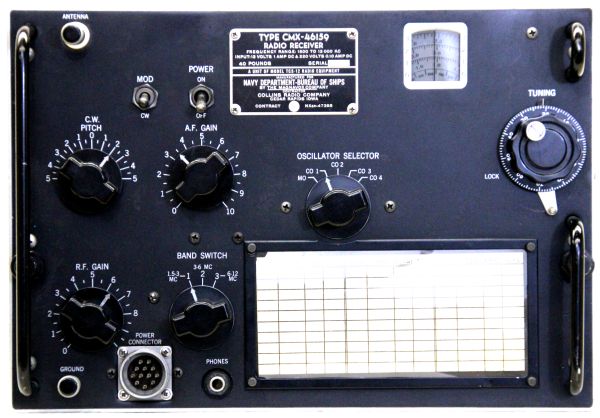
TCS-12 Receiver, Front view
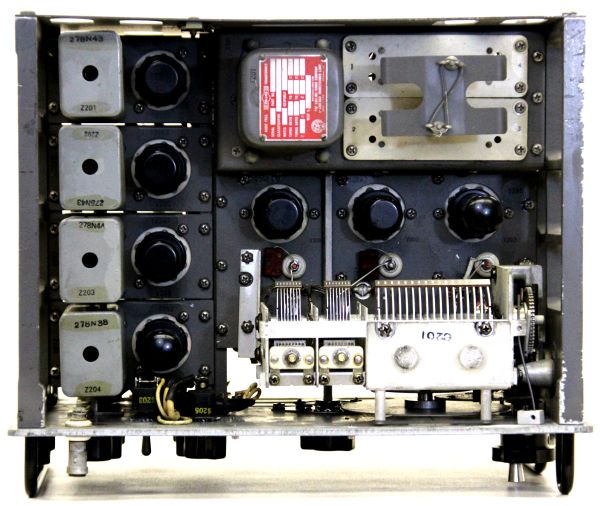
TCS-12 Receiver, Top view
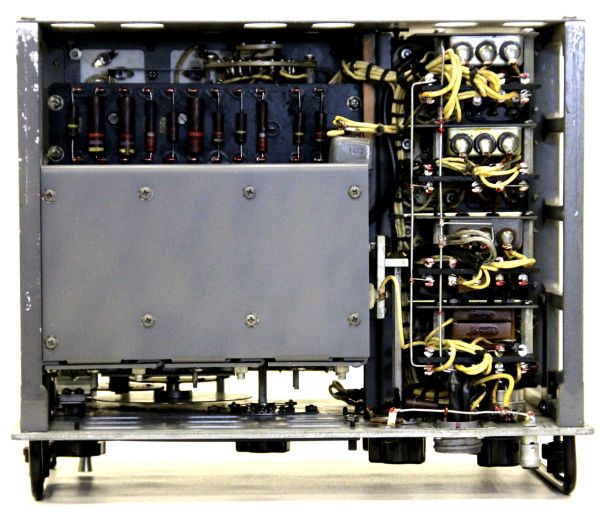
TCS-12 Receiver, Bottom view
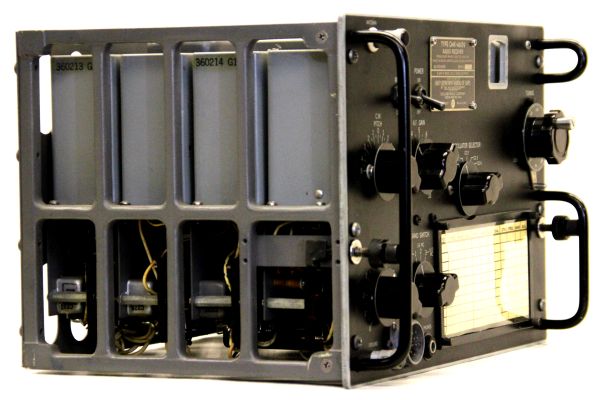
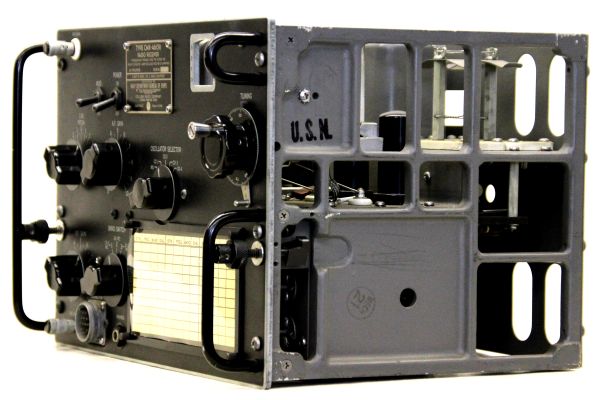
| Line 18: | Line 18: | ||
<center>TCS-12 Receiver, Bottom view</center> | <center>TCS-12 Receiver, Bottom view</center> | ||
== Construction == | == Construction == | ||
| + | The chassis for the TCS-12 units utilized cast aluminum side panels and a standard quarter-inch front panel.<br /> | ||
| + | In Navy installations, they were riding on shock mounted trays. | ||
| + | [[File:Cmx-46159 left m.jpg|center|Left View]] | ||
| + | [[File:Cmx-46159 right m.jpg|center|Left View]] | ||
Revision as of 18:22, 6 April 2020
The TCS-12 is a Transmitter – Receiver set produced for the U.S. Navy Department during WW II.
They provided CW and Voice operation on three HF bands; 1.5-3, 3-6, and 6-12 Mc.
The radio pair required a separate Power Supply fixture providing 12, 220 and 400 VDC - the latter two from a motor-generator (dynamotor) system.
The military nomenclature for the transmitter was COL-52245 and the receiver was CMX-46159.
The receiver was contracted to Magnavox to fulfill WW II production requirements.


Construction
The chassis for the TCS-12 units utilized cast aluminum side panels and a standard quarter-inch front panel.
In Navy installations, they were riding on shock mounted trays.


